These activities are available for the ESCONI show, STEM events at schools, and other educational events. Contact Eric Gyllenhaal at gyllenfish@aol.com for more information.
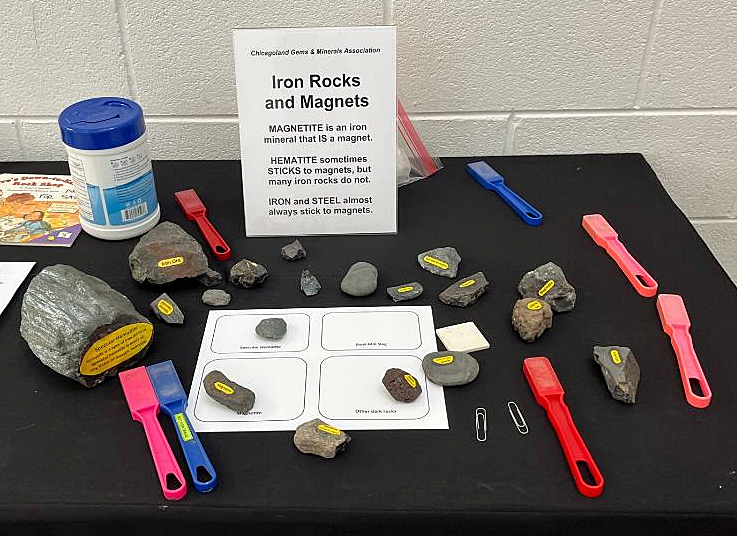
Iron Rocks and Magnets. This activity lets children experiment with magnets and a variety of rock types – including magnetite, iron-rich rocks that attracted to magnets, and some completely non-magnetic rock types. Each specimen has a glued-on identification label. Additional labels include instructions and a chart that children can use to sort the rocks by type and magnetic properties.
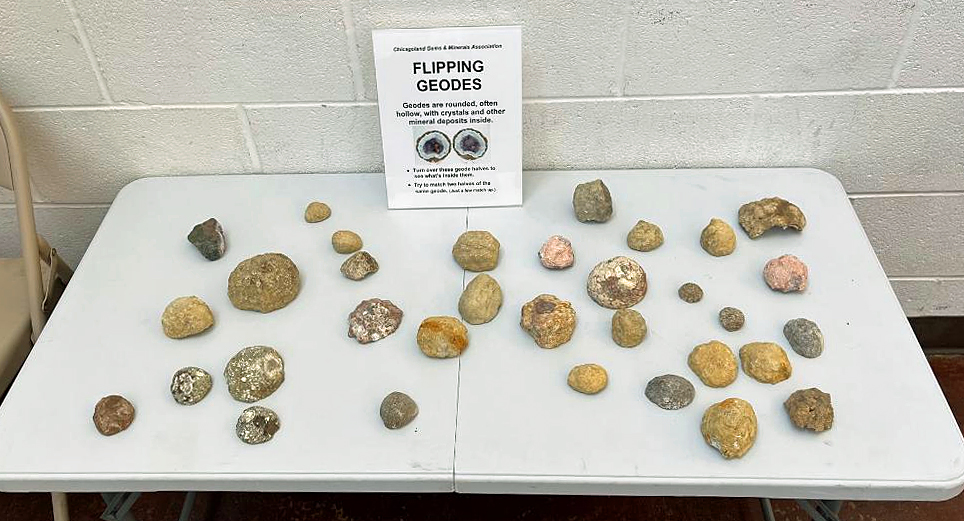
Flipping Geodes. At this hands-on exhibit children can turn over half geodes to see the variety of geode types found worldwide and the sorts of minerals they include. Children are also challenged to find the three or four matching pairs of geode halves. Books about geodes provide additional information about geodes and similar rock features.
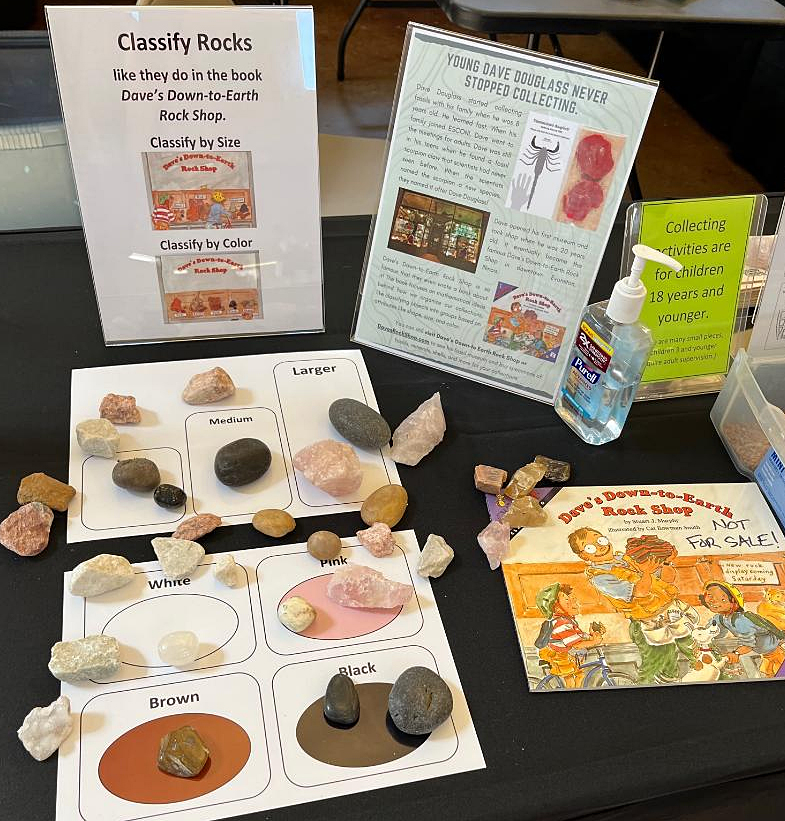
Classify Rocks. This activity was developed from classification concepts discussed and illustrated in a children’s book about Dave’s Down-to-Earth Rock Shop in Evanston, Illinois. Children use charts to classify a variety of rock types based on size and color. We also include one or more copies of the book and a label with information about Dave Douglass, former owner of the rock shop and a long-time ESCONI member.
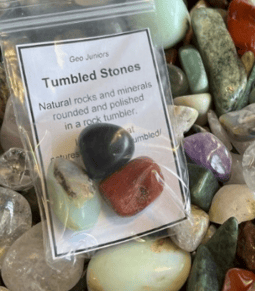
ESCONI Spinner. At the ESCONI show and some ESCONI STEM events, we use a one-spinner version of this activity. At the show children get three spins for a dollar, and each specimen they win comes in a zippered bag with a label (examples on the in the second photo, below). At STEM events in schools, children spin for free.
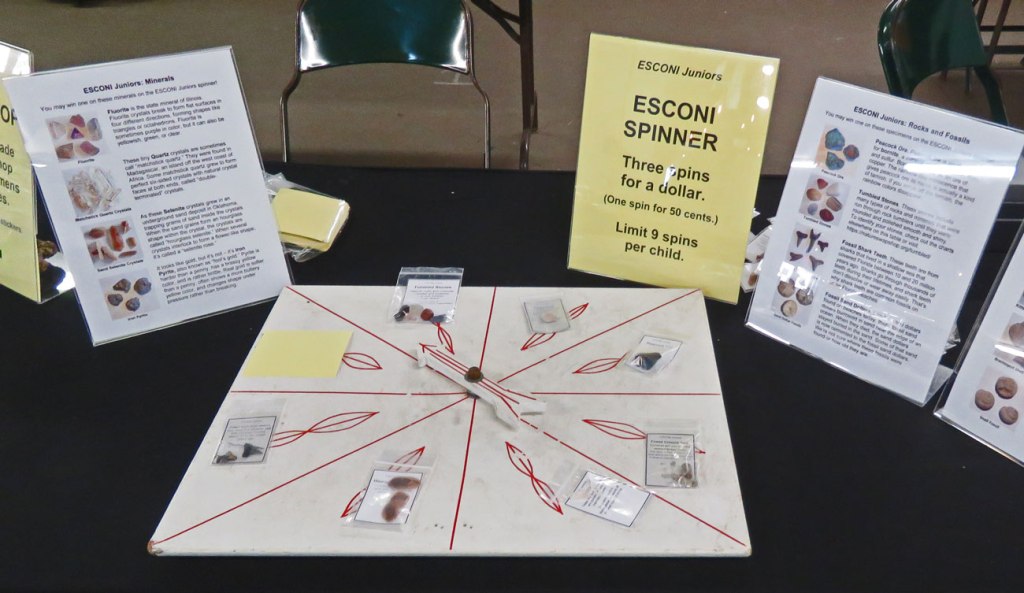
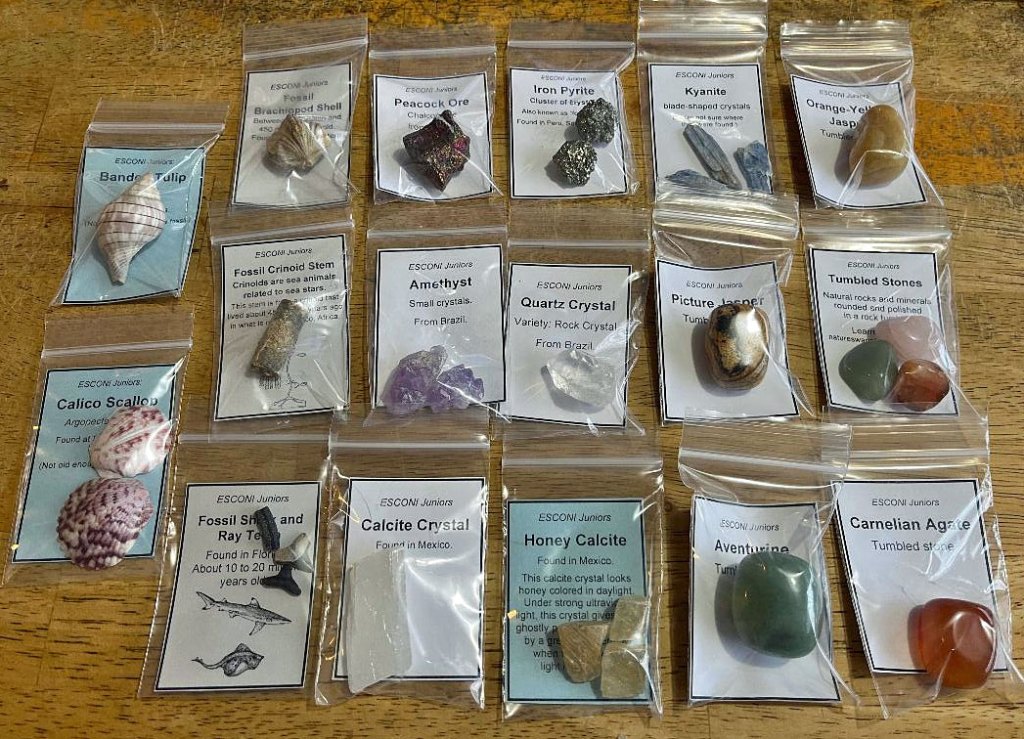
Neighborhood Rocks. At the Neighborhood Rocks activity children select six specimens of rocks commonly used as landscape stones in the Chicago area. We provide a zippered plastic bag with an inserted identification chart for children to take their rocks home. Signs include identification and other information about the six rock types. A link on the bag inserts and a QR code on a label direct participants to a web page with more information about the six rock types: https://natureswapshop.org/neighborhoodrocks/

Dolostone: The Illinois State Rock. Dolostone was officially designated the Illinois State Rock in 2022. This exhibit uses labels, specimens, and props to step visitors through the 430-million-year-old story of the Silurian dolostone quarried in the Chicago area. Children can take home zippered bags with dolostone samples from a local quarry – and adults can take home a bag of dolostone, too, since Illinois did not have a state rock when they were growing up. A label with a QR code and an insert in each bag link to a web page with more information about the Illinois State Rock: https://natureswapshop.org/dolostone/
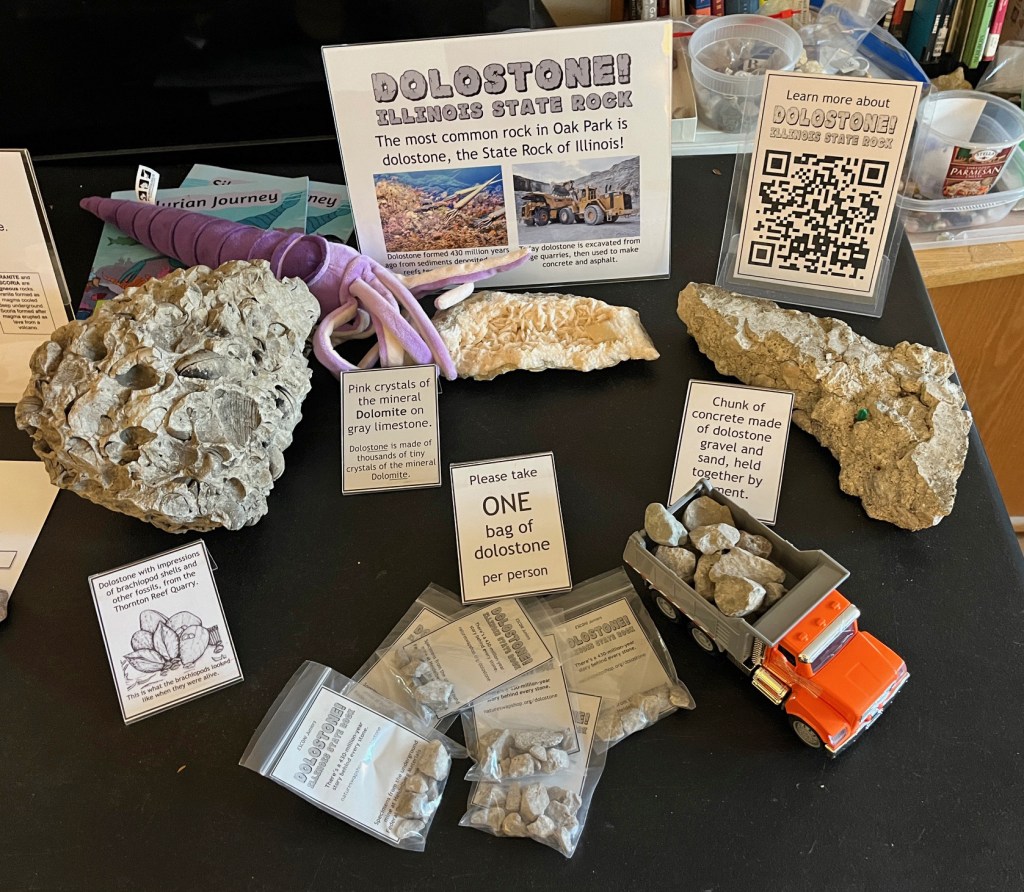
Dolostone activity at a STEM event on November 2024. Children and adults could learn about the recently designated Illinois State Rock at this hands-on exhibit and take home a small, labeled bag of dolostone for their collection.
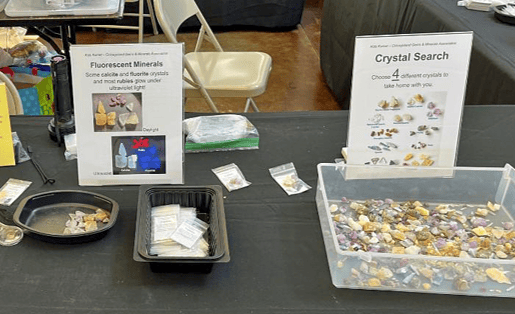
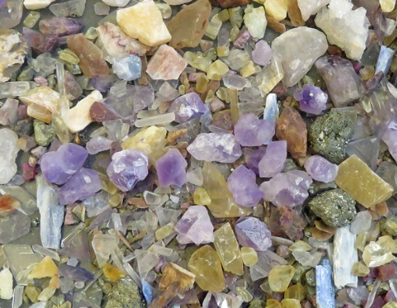
Crystal Search. Children sort through bins that contain many kinds of small crystals, choosing the seven or so they like best to take home in a small bag. A printed chart has photos and names of all the crystal types. The insert in the collection bag includes a link to a web page with a copy of the identification chart: https://natureswapshop.org/crystals/ At least some samples of four of the minerals in the bins are fluorescent: Most of the tiny ruby crystals, the “honey calcite” cleavage crystals, some of the fluorite cleavage crystals, and most of the tiny pieces of Moroccan geode. We can provide UV (ultraviolet) flashlights to demonstrate which crystals fluoresce.
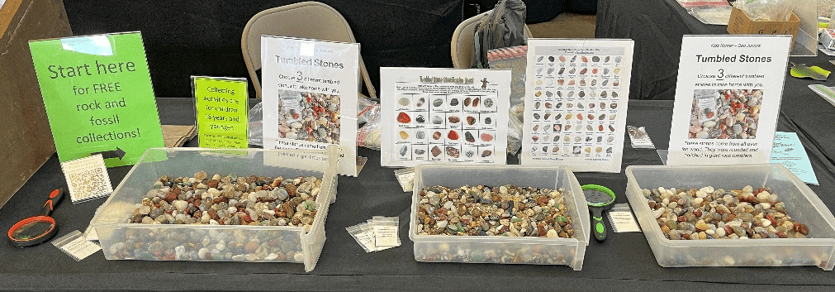
Tumbled Stones. At this activity, children sort through bins packed with dozens of kinds of small tumbled stones, choosing the three or four they like best to take home in a small bag. Printed charts identify some of the most common stones, and the insert in the zippered collection bag includes a link to a web page with more identification resources: https://natureswapshop.org/tumbled/
Fossil Shark Teeth from Morocco. Children search for their 45- to 70-million-year-old fossil shark teeth in a matrix of broken teeth. Signs warn parents and children that the teeth are very sharp, and tweezers are available to help children sort through and pick up their teeth. Children can identify their finds by comparing them with posters of Moroccan shark and ray teeth, plus there is a display of other sorts of fossils found in the same sedimentary deposits. We can alsoprovide an exhibit of jaws from modern bull and sand sharks, plus a small bull shark jaw that participants can touch when a volunteer is available to supervise.
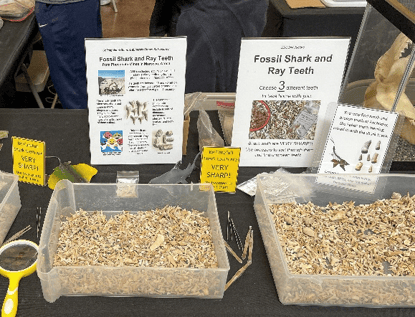
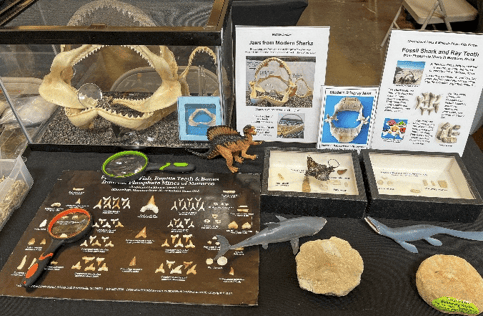
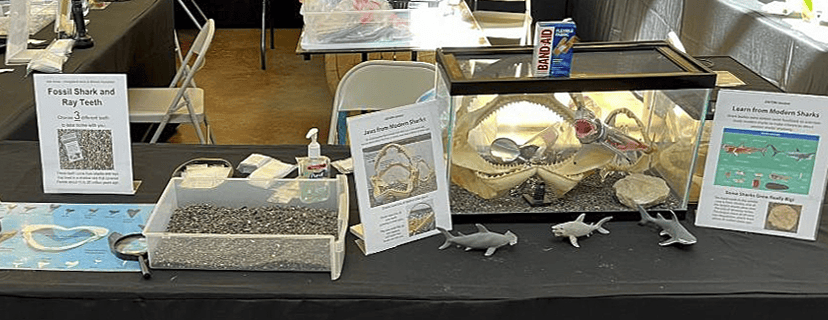
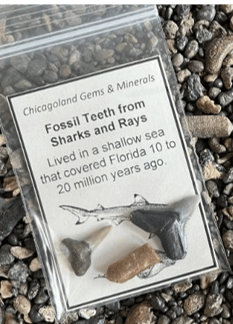
Fossil Shark and Ray Teeth from Florida. Children search for fossil shark and ray teeth in a matrix of phosphatic gravel from the Peace River in Florida. The 10- to 20-million-year-old fossil teeth are also from Florida (for the most part), a mix of rather worn teeth collected on beaches and sharper teeth collected from river and undersea deposits. Children can identify their finds by comparing them with photographs on a placemat purchased in a Florida shell shop many years ago. We can also provide an exhibit of jaws from modern bull and sand sharks, plus a small bull shark jaw that participants can touch when a volunteer is available to supervise.
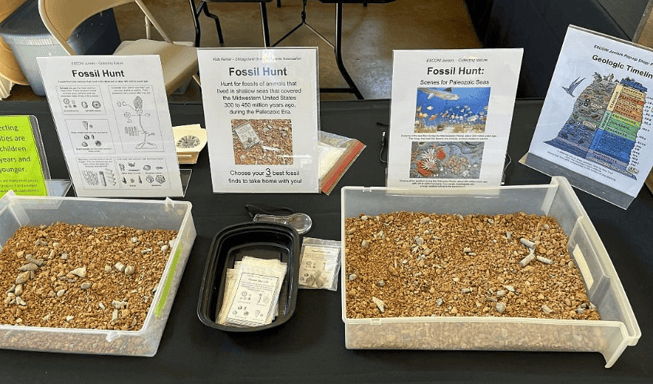
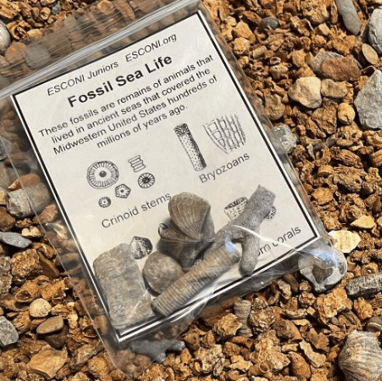
Paleozoic Sea Life (Fossil Hunt). Children search for fossils of crinoid stems, brachiopods, bryozoans, horn corals, and other invertebrate fossils in a matrix of weathered fossiliferous limestone from Indiana. The fossils vary in age from Ordovician to Pennsylvanian and were collected from sites throughout the Midwest. Each child can take home their favorite fossil finds in a small, zippered bag. An insert in each bag has drawings of some of the most common Paleozoic marine invertebrates. Labels behind the collecting bins included a fossil identification sheet and photos of museum dioramas depicting Ordovician and Mississippian sea floors.
Salt the Sandbox / Specimens in Oatmeal
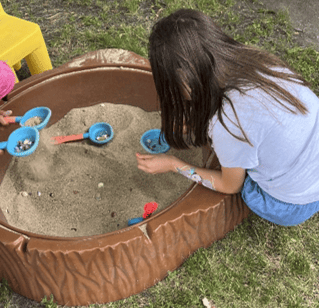
Sometimes it’s fun to mix together the minerals, rocks, tumbled stones, fossils, and shells from all the collecting activities described above. Then we let children sift or sort out the specimens, select and identify the ones they like the best, and then take them home in a zippered bag. In outdoor settings we do that using a sandbox “salted” with the mix of specimens and provide plastic sifters to excavate them. We include identification labels on a nearby table and enough adult supervision to help identify finds and to make sure children don’t take home too many specimens or too much sand.
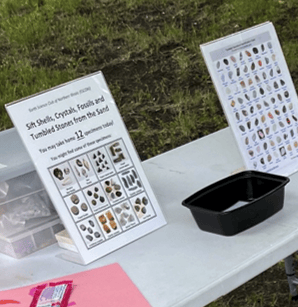
Sand is too messy and scratchy to use in school gyms and lunchrooms, so one of our volunteers pioneered the use of oatmeal as a matrix for children to sort through at school STEM events. The children use brushes or their fingers to excavate the specimens and take them home in small zippered bags. Since several specimens, including rubies, fluoresce in slightly darker indoor settings, we can equip volunteers with UV flashlights for supervised use at the oatmeal box. Labels for this activity include both an identification chart and additional labels with more information about each type of specimen.
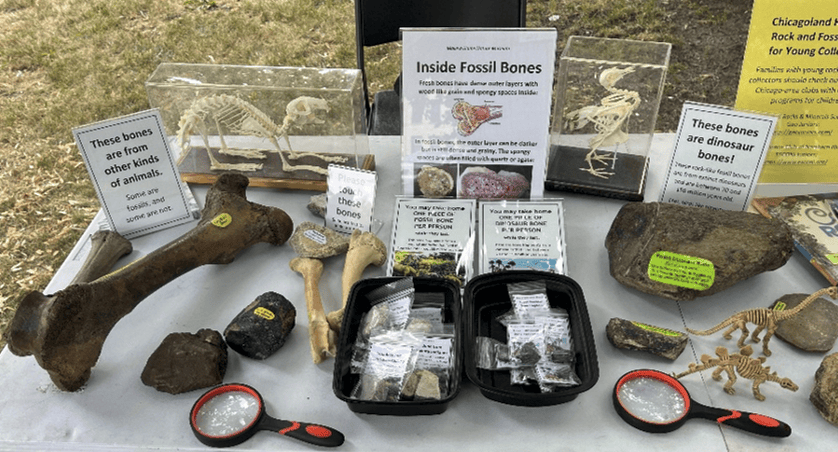
Inside Fossil Bones. This activity originated as an opportunity for children to touch real bones, including fossil bones of dinosaurs and whales and more modern bones, including 300-year-old buffalo limb bones. This photo shows how we set out the bones at the 2026 CGMA show:
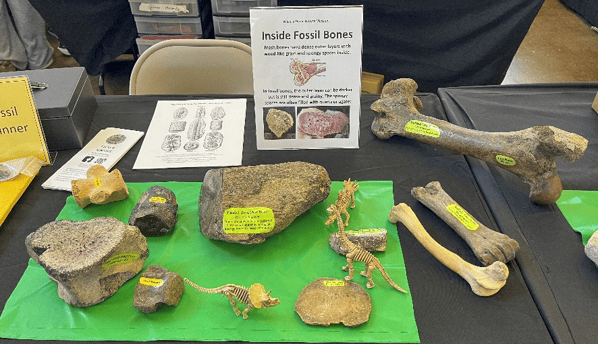
A revised version of Inside Fossil Bones includes additional signs and modern skeletons of a mammal (rabbit) and a living dinosaur (a.k.a, bird, a pigeon). Recent donations made it possible to expand this activity to include take-home samples of fossil bones from Florida and South Dakota. Here’s a photo of the revised activity as set up at the July 2026 Sundays on the Boulevard event:
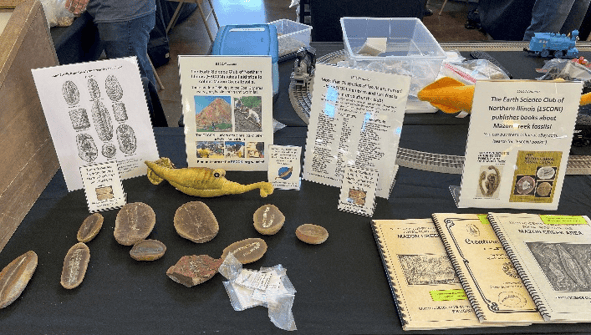
Mazon Creek Fossils. This activity includes hands-on examples of Mazon Creek fossils, examples of books about Mazon Creek published by ESCONI, and signs highlighting ESCONI Juniors field trips to collect Mazon Creek fossils as well as other Juniors activities.
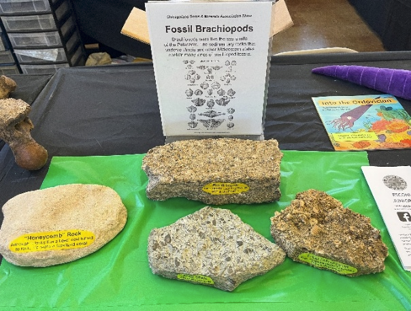
Hands-on Invertebrate Fossils. This set of specimens includes a slab of fossiliferous Ordovician limestone from the Cincinnati area, a slab packed with Mississipian crinoid stems from southcentral Indiana, a large chunk of Cenozoic turritella agate from out west, and a large “honeycomb” coral of unknown age and locality. Each specimen has a glued-on label. We sometimes display these specimens in conjunction with the Paleozoic fossil hunt, described above.
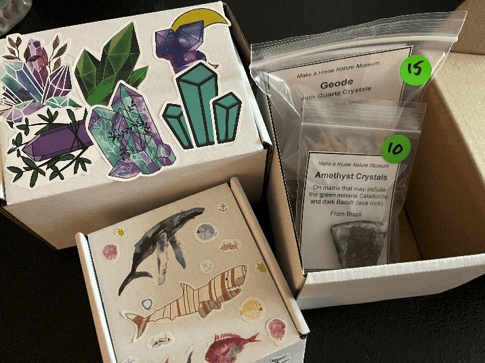
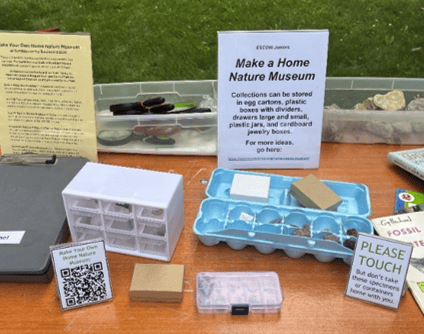
Make a Home Nature Museum. This exhibit demonstrates several inexpensive ways that young collectors can store or display their collections.
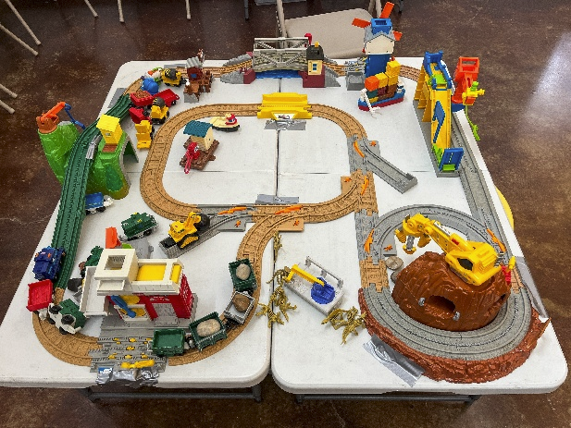
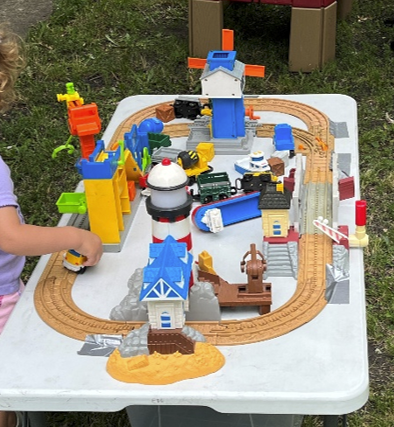
Play with Trains and Rocks. Rock and fossil shows and other large-scale events can be difficult experiences for families with younger children, so we often set aside an area with hands-on and playful experiences for young children and chairs for their weary adults. GeoTrax is a plastic toy train and track system made by Fisher-Price in the early 2000s. Eric has a large collection of GeoTrax trains, track, and buildings that can be set up in a variety of thematic configurations. The GeoTrax quarry layout in the photo on the left lets children load small plastic trains and trucks with pebbles and transport them around the table. The photo on the right shows a more aquatic configuration that we use in conjunction with activities shark tooth collecting and other aquatic activities.
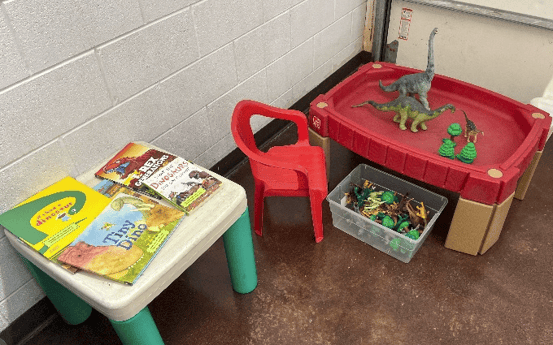
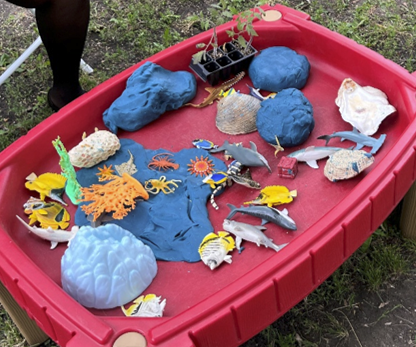
Play from Toy Dinosaurs / Sea Life. A box of plastic dinosaurs is a great way to keep young children occupied in a semi-educational way, so we often set up a plastic sand table with large variety of plastic dinosaurs and a nearby kid-sized table with children’s books about dinosaurs (left photo). For events with themes about sharks and other sea life, we set out the same sand table with a large collection of plastic sea creatures (right photo) and a table with sea life identification charts and books (not shown). When we set up these activities outdoors, we often include homemade playdough on the sand table – blue for sea life, brown for dinosaurs.
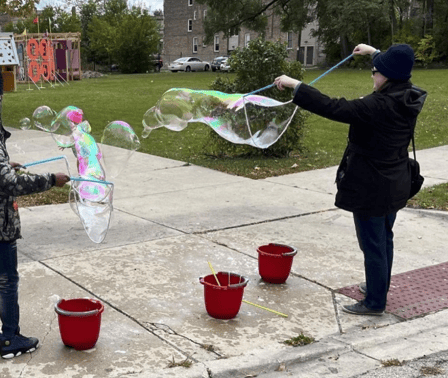
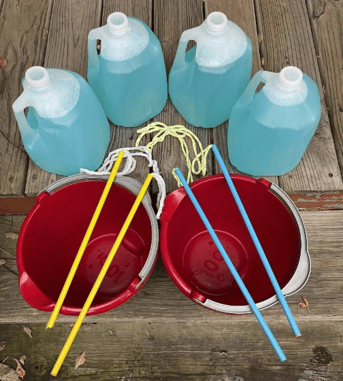
Giant Bubbles. Just for fun, our outdoor events often include the opportunity to make giant bubbles, an activuty that’s popular with both children and adults. Here’s a link to Eric’s recipe for homemade giant-bubble juice: https://douglasparknature.org/wp-content/uploads/2022/04/bubblejuicerecipe.pdf The Big Bubble Wands we use were purchased from the South Beach Bubbles Store on Amazon.
The first photo below was taken at an October 2022 event at the Lawndale Pop-up Spot in Chicago. Because spilled bubble juice is so slippery, we no longer do this activity on sidewalks or other pavements.
Decorating Boxes to Store and Display Collections. This activity was developed for use at Sundays in the Boulevard events in Chicago. We provide a variety of small cardboard boxes, some with clear plastic windows and some without, plus stickers that match the theme of the event and washable colored markers. Then, with the help of an ESCONI volunteer, both children and adults can decorate a box, as shown in the photos below.